|
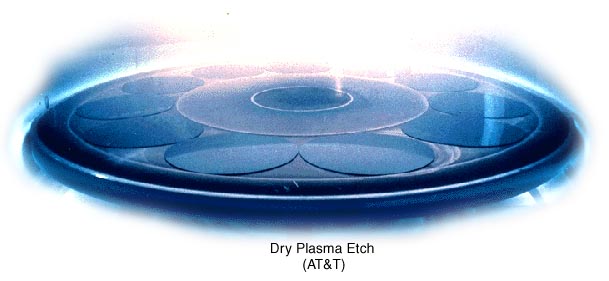
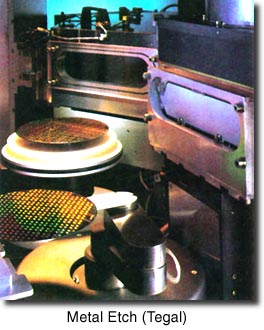
A wafer is placed into the etch tool's processing chamber
and given a negative electrical charge.
The chamber is heated to 200°F (100°C) and brought
to a vacuum level of 10 millitorrs, then
filled with a positively charged plasma
(usually a mix of nitrogen, chlorine and boron trichloride).
The opposing electrical charges cause the rapidly moving plasma molecules to align themselves in a vertical direction,
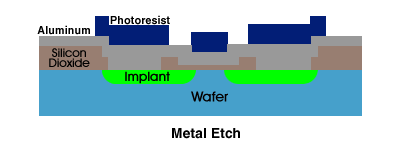
forming a microscopic chemical and physical "sandblasting" action which removes the exposed aluminum.
|
|